Tuesday 24th October 2017
Psychogeography describes the effect of a geographical location on the emotions and behaviour of individuals.
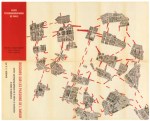
How do different places make us feel and behave? The term psychogeography was invented by the Marxist theorist Guy Debord in 1955 in order to explore this. Inspired by the French nineteenth century poet and writer Charles Baudelaire’s concept of the flâneur – an urban wanderer – Debord suggested playful and inventive ways of navigating the urban environment in order to examine its architecture and spaces.
As a founding member of the avant-garde movement Situationist International, an international movement of artists, writers and poets who aimed to break down the barriers between culture and everyday life, Debord wanted a revolutionary approach to architecture that was less functional and more open to exploration.
The reimagining of the city proposed by psychogeography has its roots in dadaism and surrealism, art movements which explored ways of unleashing the subconscious imagination. Tristam Hillier’s paintings such as La Route des Alpes 1937 could be described as an early example of the concept.
Psychogeography is an exploration of urban environments that emphasizes playfulness and “drifting”. It has links to the Situationist International. Psychogeography was defined in 1955 by Guy Debord as “the study of the precise laws and specific effects of the geographical environment, consciously organized or not, on the emotions and behavior of individuals.”[1] Another definition is “a whole toy box full of playful, inventive strategies for exploring cities… just about anything that takes pedestrians off their predictable paths and jolts them into a new awareness of the urban landscape.”[2]
Psychogeography was defined in 1955 by Guy Debord as “the study of the precise laws and specific effects of the geographical environment, consciously organized or not, on the emotions and behavior of individuals”. It’s a complex topic that has developed quite a following.
We have put together details of some of the most important popular books dealing with the subject of psychogeography. Click on the book titles below for more details, from authors such as Rebecca Solnit, Will Self and Merlin Coverly.
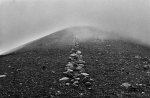
Examples of Psychogeography Photography



 Michelle Wright, Fine Artist